
Keywords: safety, accessibility, participatory mobility governance
Main characteristics:
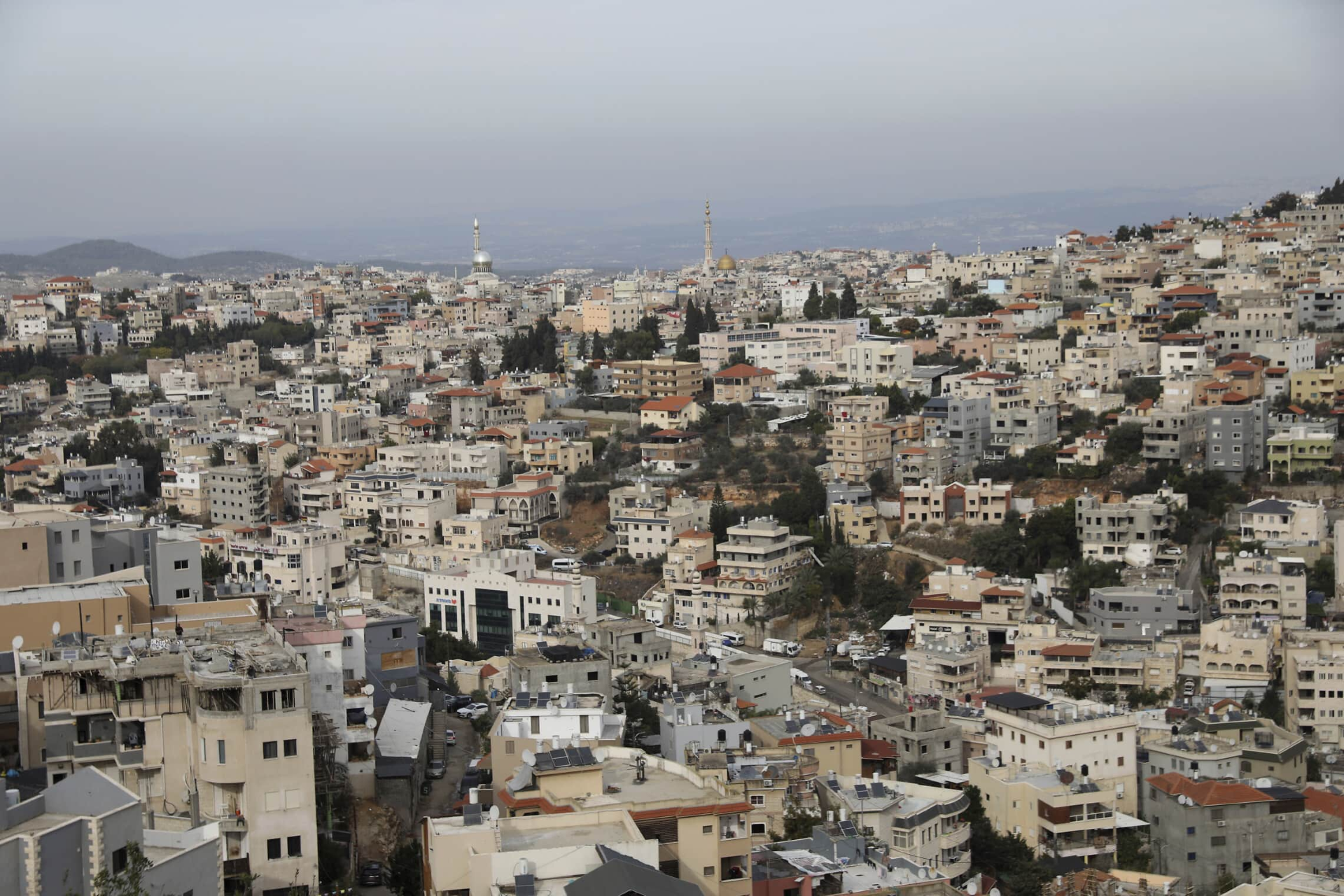
- Third-largest predominantly Arab city in Israel, with around 59,000 residents, 99.9% of whom are Muslim Arabs.
- Major cultural, social, and economic hub for the Wadi Ara and Triangle regions.
- Located on the Umm al-Fahm mountain ridge, with a historically layered urban evolution—from Ottoman agrarian settlements to British Mandate administration, and later incorporation into Israel (1949) and recognition as a city (1985).
- Strong internal social organization shaped by clan-based quarters, community associations, and civic activism.
- Increasing civic capacity reflected in recent initiatives such as the Green Carpet Association for tourism and environmental projects, and the Umm al-Fahm Art Gallery.
- Relevant as a case study of local governance biomes, community-led planning, and mobility participation in a socially cohesive yet politically complex context.
Challenges to tackle:
- Steep topography and narrow street rights-of-way limit accessibility and safe circulation.
- Underdeveloped mobility infrastructure and weak connectivity to regional transport networks.
- Socioeconomic pressures, including high poverty rates and limited municipal resources.
- Structural constraints typical of peripheral urbanisation and minority governance contexts, affecting mobility planning and service provision.
- Need to strengthen participatory governance for mobility policies in a context marked by strong social cohesion but institutional constraints.
Main goals of the TC:
- Replicate and adapt lessons learned from AMIGOS Living Labs and SIAs within a new, complex urban and governance ecosystem.
- Test how participatory mobility governance, safety improvements, and accessibility measures can be transferred to a predominantly Arab city with unique socio-spatial characteristics.
- Provide local officials with new tools, data-driven insights, and simulation-based policymaking methods to better serve residents.
- Enhance walkability, safety, and accessibility in ways aligned with the city’s cultural identity, community structures, and emerging environmental initiatives.
- Contribute to AMIGOS’s assessment of how mobility innovations can be scaled to diverse European and neighbouring contexts.
