
Key words: Planning, digitalisation, school trips and sustainability
Main characteristics:
- Population: 98,000 inhabitants (2024)
- Area: 59 km²
- Population increase 2000-2015: +18.5%
- Median age: 37.5
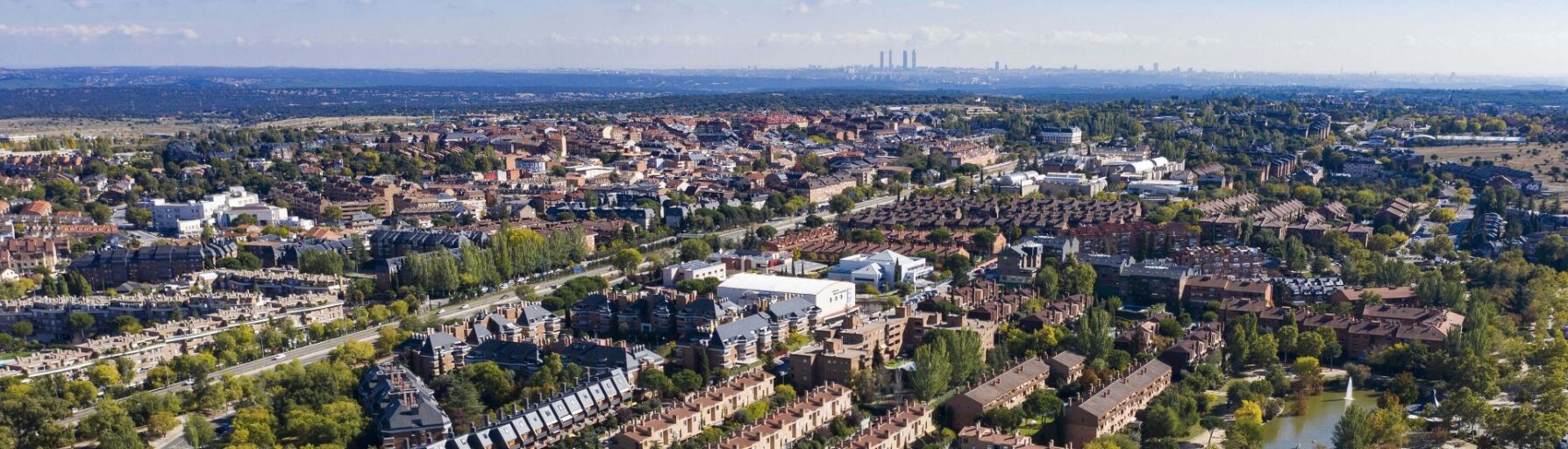
Las Rozas is a very dispersed municipality with a considerable extension crossed by major highways Las Rozas, due to its particular expansion and fracture due to the automobility arteries that interrupt it, needs a huge effort on planning mobility solutions so that the people who arrive to the city every day, through the train stations, can access the centres of attraction such as the universities or the office and business areas.
The extension of the municipality, the urban dispersion, the increase in population that has occurred in recent years and the existence of an important business network, makes Las Rozas an important generating focus and attractor of both internal and external trips to the municipality.
On the other hand, the big amount if schools in Las Rozas and the car dependency on the school trips is a concern of the city so planning more sustainable alternatives is essential in the Living Lab.
Challenges to tackle:
- Municipality dispersion and the existence of three main axes (boteh regional and national roads) pose great challenges for the management of the mobility of the municipality especially for the promotion of active mobility (pedestrians and cyclists)
- Different levels of administration managing road infrastructures
- Environmental problems generated in recent years in the municipalities by the excessive use of polluting vehicles
- Car dependency on school trips
Main goals of the LL:
- Improve mobility solutions so that the people who arrive to the city every day, through the train stations, can access the centres of attraction such as the universities or the office and business areas
- Optimise routes to schools
- Give alternatives for improving sustainability on school trips
- Improve mobility planning process
